

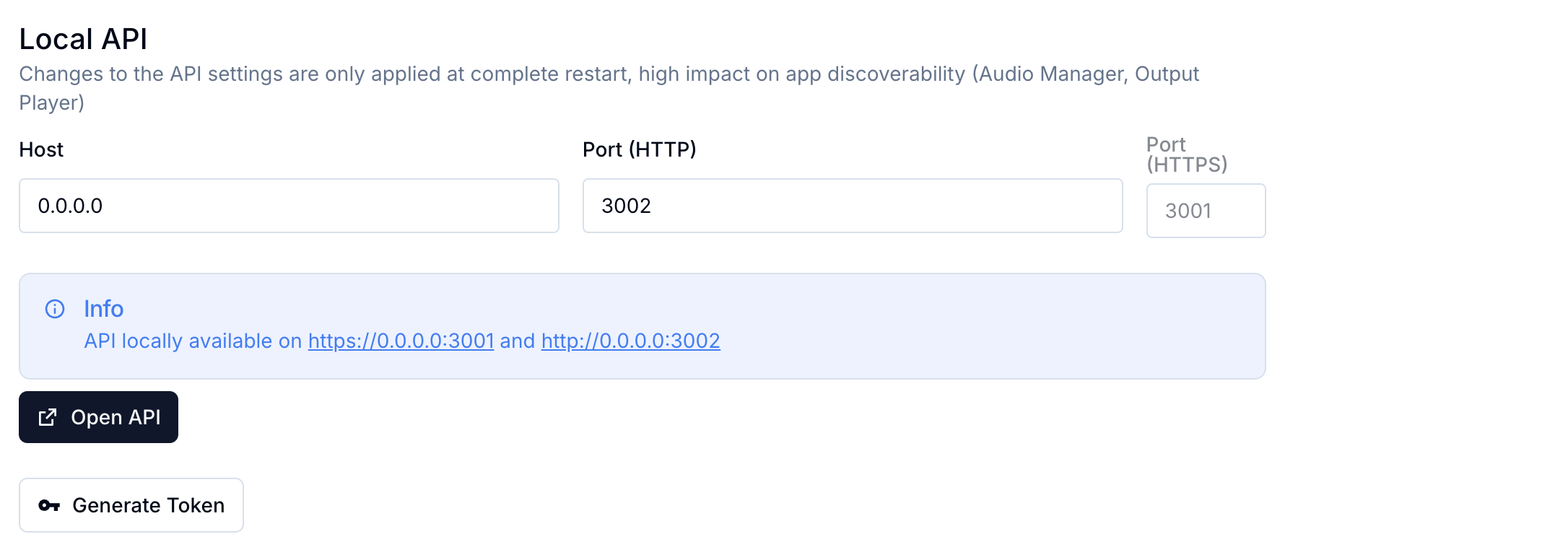
3002 allowing remote access over the LAN by all NIC’s via host 0.0.0.0
The Advanced Core Settings do allow you to set custom ports and hostnames to have more gradual control over the Core API network access.
Base URLs
Replace
3002 when you set a custom port in the Advanced Core Settings. The TCP and OSC ports are set under Studio settings → Core API → TCP and OSC, see TCP and OSC. See Routes and Legacy routes.
Authentication
Most endpoints of the Local API are secured with authentication. Who may call the API is set per studio in VRA Cloud under Studio settings → Core API:- Device tokens: each Stream Deck, Companion instance, panel or script gets its own token.
- Access without a token: off, listed addresses, or the whole LAN.
- Legacy authorization: the shared
EXTERNAL_APPheader below, on by default. It opens the legacy/api/...routes only, not/api/v2.
Legacy authorization
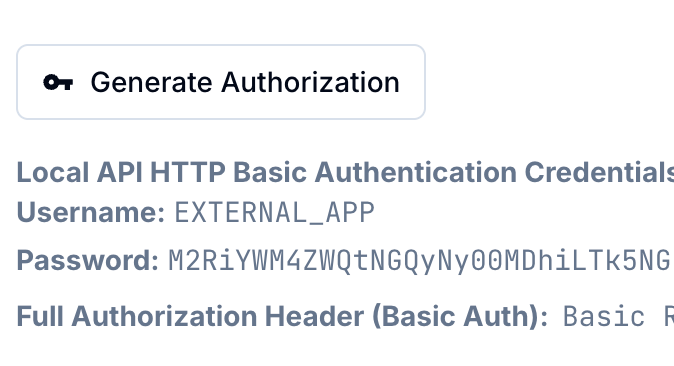
Click on the Generate Authorization button in the Cloud Core Settings to generate a username and password for accessing the API. The username isEXTERNAL_APP, the password is the base64 of the Core’s server id.
The authentication method is “Basic Authentication” and you authorize yourself with the Authorization header:
/api/v2 route answers 403 forbidden to it. Use a device token for new devices.